How Can Florists Reduce Water Use Conditioning Flowers?
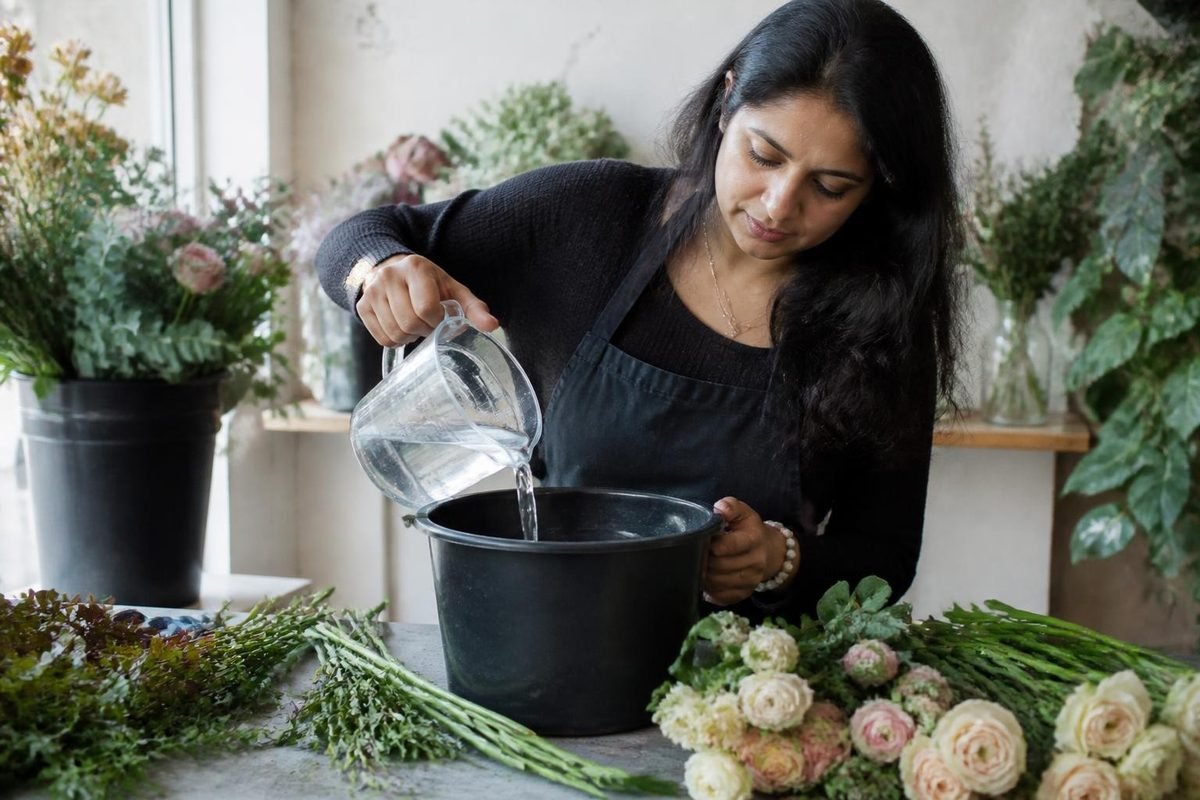
Florists can reduce water use during conditioning by matching bucket size and water depth to the stems, measuring fills, and preventing spills. Clean equipment and regular water checks help keep flowers hydrated without changing water more often than needed.
Choose the right containers
Use a bucket that holds the bunch upright without leaving a large volume of unused space around it. A very wide bucket may need more water to reach the same depth as a narrower one. Avoid packing stems so tightly that flowers are crushed or air cannot circulate around them.
Mark a practical fill line on frequently used buckets. The line gives staff a consistent starting point and makes it easier to spot overfilling. It is not a universal depth: follow the supplier's care instructions for each flower, since stems differ in their hydration needs.
Group flowers with similar care requirements where practical. This can reduce the number of partly filled buckets, but leave enough room to handle and inspect each bunch. Keep varieties separate when their conditioning instructions call for it.
Fill and handle buckets carefully
Measure the water used for common bucket sizes once, then record the amount beside the fill line. A jug or a tap fitted with a flow control can make small fills easier to judge. Turn the tap off while moving containers or preparing stems.
Place buckets where they will not be knocked over, and avoid carrying them filled to the rim. Top up to the appropriate level when needed rather than filling every container to its maximum capacity. Check for cracked buckets and leaking taps as part of the normal cleaning routine.
Trim stems with clean, sharp tools and remove foliage that would sit below the water line. This keeps loose leaves out of the water and makes buckets easier to inspect. Follow the flower supplier's directions for any conditioning solution, including its dilution and contact time.
Keep water and equipment clean
Wash buckets and tools between uses to remove residue, then use a suitable disinfectant according to its label. Rinse as directed before refilling. A cleaning schedule helps staff distinguish routine washing from unnecessary extra rinses.
Check water and stems during the day. Replace water or solution when it is dirty, when the supplier instructs, or when the product directions require it. Do not assume that water left from one batch is suitable for another; it may contain debris or residues that affect the next flowers.
Track water use over a few weeks alongside flower condition and waste. If a change saves water but leaves stems poorly hydrated, adjust the practice rather than keeping the lower fill level.
Questions florists may have
Can flowers share a conditioning bucket?
Some can, provided they have compatible care instructions and enough room. Check supplier guidance before combining varieties.
Should buckets be topped up or emptied?
Top up when the water is clean and the care instructions allow it. Empty, clean and refill when the water is dirty or a change is due.
Is a lower water level always better?
No. Use the depth appropriate to the flower and its conditioning instructions. Saving water should not come at the expense of hydration.
For more detail, see gift delivery in another time zone